The Candle, the Box, and the Blind Spot in How We Solve Problems
Share this article
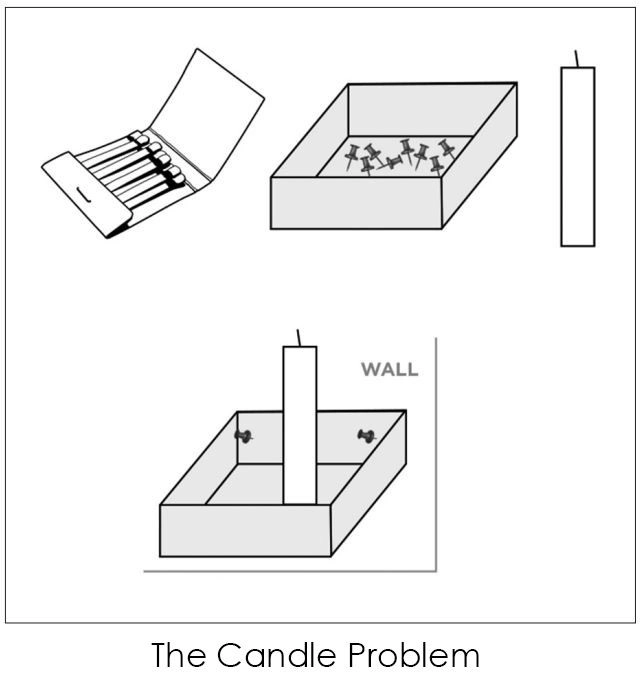
I recently stumbled on this phenomenon while reading a book, and it stayed with me. It’s called the Candle Problem. In a simple experiment, people are asked to fix a candle to the wall so it can burn without dripping wax on the table. They are given a candle, some thumbtacks, and a box of matches. Most people try to tack the candle to the wall or melt it to stick it there. What many don’t realise is that the box holding the thumbtacks is the missing piece. If you empty it, tack the box to the wall, and place the candle inside, it works perfectly. But most people never consider using the box that way, because they’ve already decided what it’s supposed to be—a container, not a platform.
This is a powerful illustration of what psychologists call functional fixedness. It’s the idea that we get stuck seeing things in only one way. In careers and business, this shows up more than we care to admit. We get used to our titles, our job descriptions, and the tools we’re handed, and we stop asking deeper questions. We say things like “this is how we’ve always done it,” or “this isn’t my role,” without pausing to think whether the box we’re looking at can be used differently. And just like in the candle experiment, we miss the solution because of how we’ve framed the problem.
For business analysts in particular, this is a warning and an invitation. If your role is to solve problems, you have to train your mind to see beyond the obvious. You need to look at the system, not just the parts. Sometimes the answer is not to buy a new tool or overhaul a process, but to use what you already have in a more creative way. The thumbtack box doesn’t need to be reinvented, just reimagined. Great analysis often comes from asking simple but overlooked questions like “what else can this do?” or “are we using this to its full potential?”
In business, the most innovative companies are the ones that can break out of functional fixedness. They see opportunities where others see limitations. They don’t get stuck using tools the same way everyone else does. Instead, they encourage experimentation, they allow their people to stretch their roles, and they reward fresh thinking. You don’t need to be in a flashy startup to do this. Even in the most traditional organisations, thinking differently about familiar things can unlock real value.
So whether you’re mapping a process, building a business case, or just trying to solve a messy internal issue, remember the candle and the box. Don’t let your assumptions do your thinking for you. Take a step back. What are you overlooking simply because you’ve already decided what it’s supposed to be? Creativity isn’t always about having more resources. Sometimes it’s about seeing the same things differently.