Discovering the Margin of Safety: A Key to Financial Resilience
Share this article
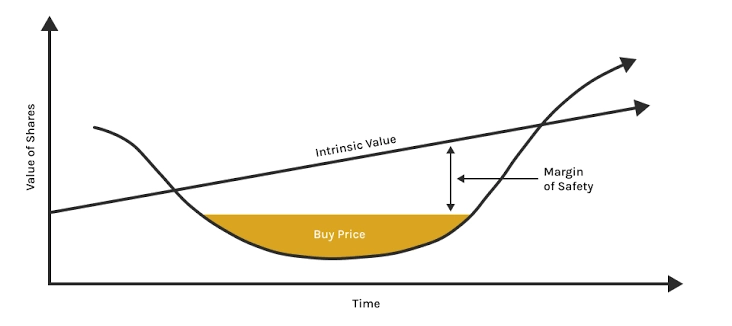
Recently, I delved into the concept of the margin of safety, a fundamental principle in both financial analysis and value investing. In the realm of investing, the margin of safety refers to the difference between a stock’s intrinsic value and its current market price. This concept was introduced by Benjamin Graham and David Dodd in their seminal 1934 book, Security Analysis, laying the foundation for value investing. By investing in stocks priced below their intrinsic value, investors create a buffer against potential errors in analysis or unforeseen market downturns, thereby protecting their capital.
As a business analyst, I’ve come to appreciate the significance of the margin of safety in various financial contexts. In financial management, it represents the buffer between actual sales and the break-even point, indicating how much sales can decline before a company incurs losses. This metric is crucial for assessing a company’s financial resilience and aids in strategic planning and risk management.
In personal finance, the margin of safety concept translates to the difference between one’s income and expenses, reflecting an individual’s capacity to withstand financial shocks. Maintaining a healthy margin ensures that unexpected costs or income reductions do not lead to financial distress, promoting prudent spending and robust savings habits.
From a risk management perspective, the margin of safety acts as a safeguard against uncertainties. By accounting for potential errors in projections or unforeseen market conditions, individuals and organizations can mitigate the impact of adverse events, fostering a culture of caution and preparedness essential for long-term stability.
For business analysts, understanding the margin of safety is invaluable. It enables us to evaluate a company’s vulnerability to market fluctuations, assess the prudence of investment opportunities, and advise on strategies to enhance financial robustness. By incorporating this concept into our analyses, we can provide more comprehensive insights, facilitating better decision-making and contributing to the overall health of the organization.